The Billion-Dollar Question (Simone Stolzoff)

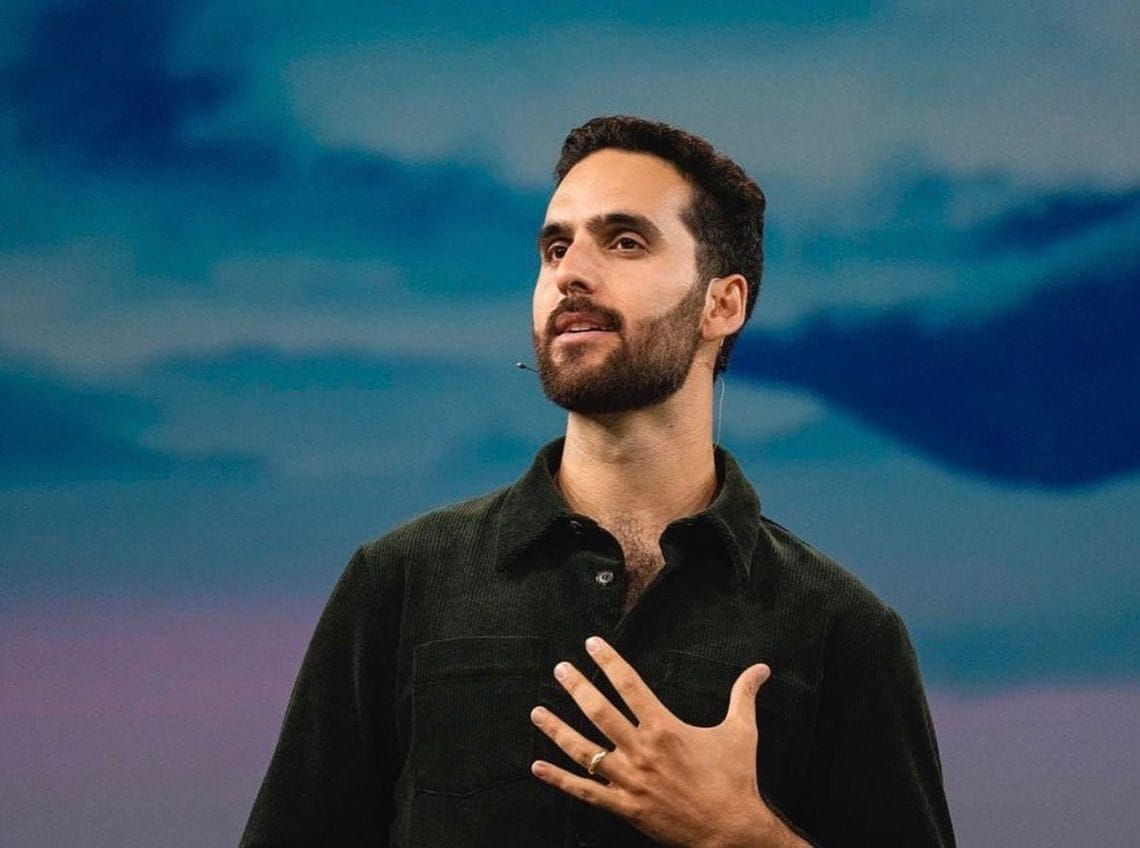
Today's case study is of bestselling author Simone Stolzoff, on his journey becoming a father while writing his second book as a solo business owner.
Simone Stolzoff could not get that number out of his head: one billion dollars.
The slices of his influential career didn’t seem to add up to a whole pie: writing, teaching, speaking, freelance journalism for publications like the New York Times and National Geographic. He was months away from publishing the follow up to his first book, but that wasn’t even the most exciting development: His partner was pregnant with their first child.
With both a baby and book release about to change his life, one question became louder with each passing day: Could his current career support an unborn child?
“It felt like I needed to make more money or make different choices,” he said.
And when the stakes were the highest they had ever been in his career, he didn’t know who he could turn to for advice. There was no boss. No team. These days it was just him, working for himself for the past year and a half, trying to hold together a creative career that was expanding in more directions than he wanted to manage.
“It’s pretty lonely,” he said, of that time in his life.
Most people in his circles – creatives and operators who drive knowledge-based economies – could have recommended therapists without Googling. So could Simone: both of his parents were therapists. His journalism background made him even more skeptical of therapy, coaching, and other corners of the self-help enterprise.
“I didn’t really know what the difference was between a coach and a therapist,” he said.
What he did know is that he needed support. Not just for himself, but for the sake of his unborn child, whose entire future depended on Simone’s ability to figure out his career.
With such high stakes, he decided to hire an executive coach: “It was a bit of a leap of faith.”
What’s in a name?
When the impending deadlines pushed Simone to the point of asking for recommendations, one executive coach came up again and again: Jason Shen.
Simone was already familiar with Jason’s digital footprint, having already read Jason’s writing in Fast Company, Every, and other corners of the internet. More than the name recognition, what mattered was the sense that Jason actually understood Simone’s corner of the media universe.
“He understands the creator economy and the online ecosystem,” Simone said. “He’s a practitioner as well as a coach.” And Jason’s own books make that very clear, “My first book The Path to Pivot encapsulated all the hard business lessons I learned as a founder and YC alum, while my illustrated book weirdly brilliant is much more about what it means to succeed as an outlier achiever.”
When he learned that Jason had also built and sold several start-ups – including one to Meta during the pandemic – Simone realized that he wasn’t dealing with someone who would shill impractical frameworks, rah-rah platitudes, or inactionable vibes.
“He’s a practitioner as well as a coach.”
If he hired Jason as executive coach, what he’d really get was a fractional co-founder and a thought partner to support him during the most stressful time of his life.
His instinct was right: “I'm very glad that I decided to take the leap and start working with Jason.”
Here is how they solved the one-billion dollar question – and the many questions in between.
Do less to do more.
With so many income streams, Simone’s days were overflowing, but not always cohesive. Jason mapped the moving parts of Simone’s career with robust documentation: every piece of the pie, what role each one actually played, and most importantly, which ones actually generated income. (In Simone’s case, that was public speaking.)
Once the revenue channels were fully visualized, something shifted about Simone’s approach.
“It sounds simple, but I hadn’t really separated it out like that before,” Simone said. “That alone was clarifying. So I focused more on fewer things.”
Knowing which channels drove the highest revenue created enough bandwidth for Simone to address the next business drivers: discovery, lead generation, and marketing. “As a journalist, there’s this pressure to always be reacting, always be posting,” Simone said. Sometimes it felt like throwing spaghetti at the wall.
Jason pushed Simone to identify his “front door” – how his audience first discovered and experienced his work – and to create a replicable, sustainable system for generating more opportunities.
The solution: One thoughtful post a week, grounded in Simone’s own writing, to help audiences find him rather than the other way around.
“As a journalist, there’s this pressure to always be reacting, always be posting,”
For a new reporter who had spent years in a reactive industry, the process of getting ahead of the curve, building an audience from the top-down, and doing it in a sustainable way was a complete paradigm shift – and left more spaghetti on the plate.
The billion-dollar question still loomed in the background.
Writing the future as if it already existed
With income streams and conversion funnels now co-existing as a streamlined workflow, Jason had Simone look to the future. The tool of choice was a PR/FAQ exercise often used at Amazon to work backwards from the press release of a new product. In this case, they dove into Simone’s five-year future vision.
In working with dozens of clients from all walks of life, Jason had seen how this exercise could provide clarity and potentially life-changing self-awareness.
“I knew that with his journalism background, Simo could really sink his teeth into the PR/FAQ exercise,” Jason said. “Writing a headline that would inspire him and pull quotes that felt true to his deeper ambitions.”
Instead of brainstorming potential future outcomes or generating an action plan, Simone envisioned how people would feel if his future self was in the room at that moment.
- What would they assume that Simone had chosen to prioritize?
- What would they think that he had given up?
- What would Simone’s work look like from the outside once it had settled into a pattern?
After writing hundreds of articles and one book, this writing exercise surfaced something that Simone had never been able to fully articulate: Ultimately, he was trying to do everything at once because he hadn’t yet determined exactly what his version of professional success would look like. This exercise shed light on all of that.
“It was impactful for me,” he said, of the process of unearthing grand realizations while conducting root-cause analysis of his career. Understanding the heart of the question allowed him to start looking for the answers. What he uncovered, both during and after the client-coaching relationship, led to his second book.
Turning anxiety into something measurable
Finally, it was time to face that looming, existential question.
The one with a nine-figure answer.
How much did Simone need to earn – as a writer, as a public speaker, as anything he could be – to provide the future that he felt his unborn child deserved?
“It felt like it was going to cost a billion of dollars,” Simone said. A daunting, almost unfathomable sum of money.
As a father himself, Jason encouraged Simone to apply his investigative reporting skills to the stories he told himself.
To ask deeper questions:
- What do parents actually spend on childcare?
- How do these numbers shift as children get older?
- What had they learned about financial management since becoming parents?
Simone spoke to other parents. He looked at real numbers. He questioned his assumptions about the financial figures – as it turns out, raising a child does not require one billion dollars! – as well as the feeling that he had to face his fears alone.
Discussing the financial realities of child-rearing with other parents offered real-world data points while fostering a sense of community. Importantly, Simone listened to Jason’s other piece of advice, which was to start talking to one person who had been there all along. As Simone brought his partner into these conversations, instead of carrying every fear alone in his head, the billion-dollar question slowly became one that he could answer.
“Right-sizing that anxiety was a big thing that Jason helped me get to,” Simone said, who described this as one of the most important and impactful outcomes of their thought partnership.
The real shift wasn’t one decision
Over time, what changed wasn’t any one career move. It was about identifying the right frameworks, building systems, and making rigorous data-informed decisions– including a decision making framework for Simone’s career and life.
“When you have multiple paths you can go down, a coach can really help you frame the question correctly, articulate the right criteria for evaluating the decision (e.g. skill development, short-term financial upside, day-to-day experience), then making a holistic choice—not just one ‘by the numbers’”
Simone became much more selective about opportunities, more deliberate about what actually deserved his energy, and more skeptical of the faulty assumption that he had to choose between stability and creativity, or authenticity and self-promotion.
“It helped break that zero-sum thinking,” Simone said.
With that came a realization that was quieter and more durable: the sense that uncertainty didn’t have to be resolved before he could move forward. Simone Stolzoff’s second book, which was released in May 2026, is How to Not Know: The Value of Uncertainty in a World that Demands Answers.
“When you have multiple paths you can go down, a coach can really help you frame the question correctly, and articulate the right criteria for evaluating the decision”
Where things landed
With fatherhood, a TED Talk, and two books under his belt, Simone’s career is filled with slices that most media professionals can only dream of achieving.
Instead of feeling overwhelming or pathless, they are all parts of the same pie.
He has clearer priorities, streamlined commitments, and a steadier relationship to income and uncertainty. Most of all, by identifying how much he really needed to earn to provide for his family, and then working to get there, he developed a way of working that feels sustainable for both himself and his family and doesn’t require him to be everything everywhere all at once.
“I understand this is one season of my career,” he reflected. And if his financial goals or workstreams need to be reassessed, “I can change later.” Working with Jason Shen gave him tools that he continues to use on his own.
A different kind of clarity
“One hour a week doing some personal development and reflection can pay,” Simone said.
Maybe not a billion dollars.
But in priceless ways.
WHO IS THIS FOR?
Both Simone and Jason insist that executive coaching isn’t for everyone.
“You have to be open,” says Simone. “You get what you put in.”
And Jason, as a former NCAA athlete at Stanford University, sees no harm in that: “The same person, at different moments in their life, is going to get massively different results from coaching. My best clients are at some kind of inflection point and know deep down that things have to change. That’s when the impact is the greatest.”
Beyond that, Simone encourages potential clients to consider their needs, and look past credentials, job titles, and career stages to instead find a coach with complementary thought processes and approaches to work.
He imagines that these people would get the most out of working with Jason:
- Are navigating ambiguity in their work or identity
- Don’t have a single, linear career path
- Are balancing creative ambition with financial or life responsibilities
- Are willing to reflect honestly on their decisions, even when it’s uncomfortable
“If it feels like he is someone you can let in and trust with vulnerable things, then it can help you get from where you are to where you want to be.”
FINAL THOUGHT
If Simone has one takeaway to impart, it’s how much you can change your life in very little time:
“One hour a week of reflection and personal development can pay dividends, in both practical and more ethereal ways.”
This case study was researched and published by a third-party journalist drawing upon interviews with both Simone and Jason.
NOW IT'S YOUR TURN
What is the billion-dollar question in your own mind?
What is the massive problem that keeps you up at night with or the aspirational target that you are striving to achieve?
How committed are you to making progress on it?
Would you like to see if I'm the right partner for that journey?
We’ll explore where you are, where you want to go, and whether this kind of work is the right fit for you.
Weekly breakthroughs from my coaching practice — for founders building companies they're proud of.
Member discussion