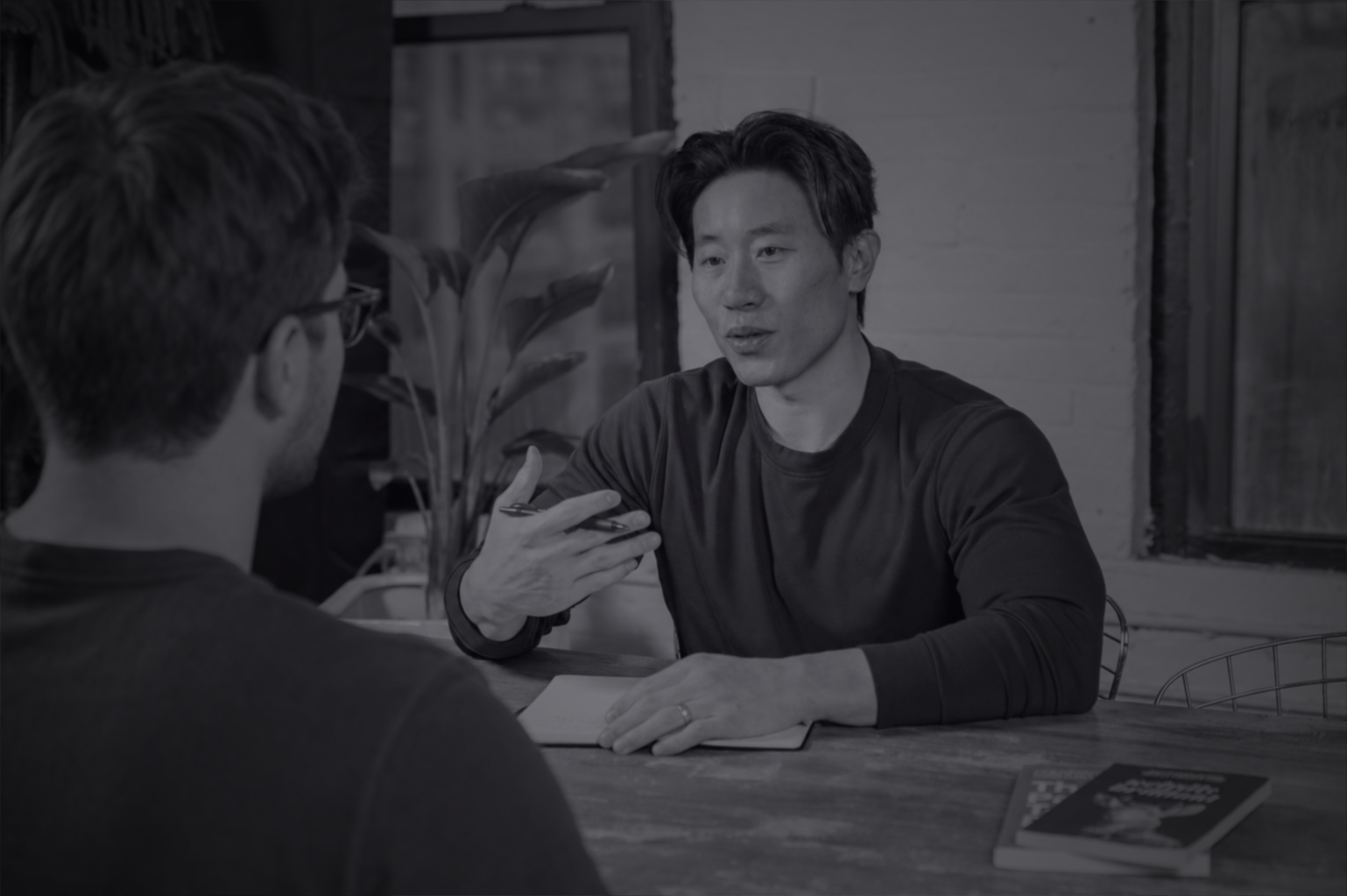
You don’t need more advice.
You need a place to be 100% honest
Founder coaching with Jason Shen
Book a $1 discovery callI coach ambitious founders tired of second-guessing themselves to lead with conviction & build companies they can be genuinely proud of
You saw a problem. You figured out a solution. You landed customers. All of a sudden, you're running a business.
But one day, things seemed to change. You realized that your ability to push code, directly solve problems, or just grind harder, not longer works.
After a thousand coaching sessions with high-achieving founders, I've seen what happens to highly capable technical founders once they hit a certain level of success:
They hit an inflection point (scaling, pivoting, confronting the end) where more hours or intensity won't be the answer. Often, they're avoiding a hard call they already know they need to make. A situation where they feel totally stuck.
The problem is thorny because has multiple dimensions:
Tactical. What does good delegation actually look like? How do you actually handle those tough objections from enterprise buyers? What do say to a cofounder whose not pulling their weight? You have answers from Claude, but you want confirmation from someone who has lived it.
Decisional. There's a choice keep circling or kicking down the road instead of choosing: pivot or double down, raise or bootstrap, scale or sell. The longer you put it off, the harder it will be to execute.
Identity. Like many founders, your self-worth has become tied to your company. If it fails, you're a failure. That identify fusion is eating at your energy, mental clarity, and closest relationships.
Who this works for
My most successful 1:1 engagements are long-term thought partnerships with technical Y Combinator-backed solo founders at Seed to Series A who do the work.
That's not a hard and fast rule but there's a good reason for each aspect:
- Solo founders. Teams of cofounders have someone to lean on, but solo founders are utterly alone. Having a sounding board can feel like a night and day difference.
- Technical founder-CEOs. There's a particular set of gaps that engineers have to cross when they start becoming company builders.
- YC alumni. Y Combinator founders know the ambition, sacrifice, and speed required to build something great. As an alum-turned-coach, I know the pressure, expectations, and comparison pains they're feeling.
- Seed through Series A. Teams of 2 to 25. This is the zone where companies outgrow their founders but
- Who do the work. Coaching is not magic. You have to bring problems, reflect on our conversations, and challenge yourself to grow. If you know you won't do the reps between sessions, save your money and my time.
If you don't see yourself in one of these buckets (nontechnical, not YC, not solo etc) but you still feel like you resonate with my approach, we should still set up time. Consider this my ICP and as every founder knows, most customers don't fit 100% of the profile.
Who this doesn't work for:
Founders still searching for an idea (you need customers, not a coach), founders unwilling to admit when they are afraid or avoidant, and anyone shopping for a cheerleader. I'm in your corner, and I'll also tell you when I'm not buying your excuses.
My approach was forged on the mat

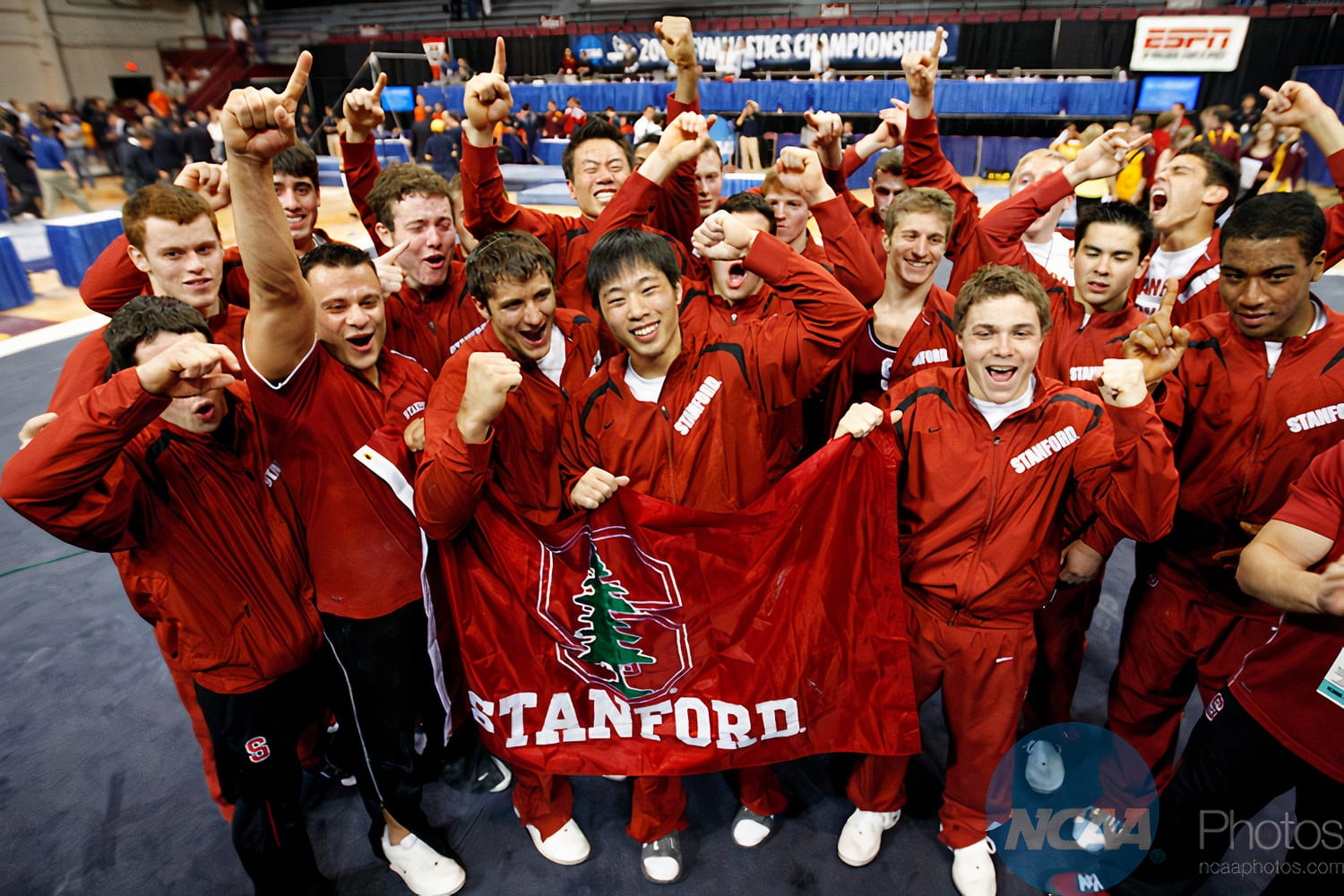
Sixteen years of elite gymnastics culminating in an NCAA national championship taught me how people learn impossible skills: break them into progressions, build in the safety so you can fully commit, and train the mind for game day.
That's how I coach founders. In practice:
Progressions. We break the overwhelming thing into components you can actually train. "Find product-market fit" becomes "one paying beta user in two weeks." A 12-week plan becomes today's top three priorities. You can't coach an outcome. You can only coach the training program that gets you to it.
Engineered safety. Gymnasts commit fully because the mat is there. Hesitation halfway through a skill is asking for injury. So we build the mat first: success / failure criteria, bounded experiments, quick tests to validate hypotheses. This is what lets you go all-in without flinching.
Hard calls, fully committed. This is the engine. The exec you finally exit cleanly after months of half-managing. The kill-or-commit deadline with real numbers attached. In gymnastics we say never balk mid-skill. The lingering half-decision does more damage than either choice would.
Game-day psychology. Go-to phrases, a CEO persona you can step into, pre-performance routines. The same sport psychology that gets an athlete through a championship meet works for demos, board meetings, and difficult conversations.
Deep ambition. Wanting to make an Olympic team or build a billion dollar company doesn't carry you through decades of sacrifice. The most resilient competitors tap into deeper motivations to drive their efforts.
Pain literacy. Athletes learn to tell productive discomfort from the pain that means injury. Many founders can't. I'll push you hard when you're building capacity, and I'll flag a real injury when I see it, before the burnout makes the decision for you.
Recovery. Falls and losses are part of the sport. The botched conversation, the churned customer, the failed launch. Getting back on the apparatus is a learned skill, not a character trait, and we train it until the second attempt comes faster than the first.
(For what it's worth, gymnastics also taught me some wrong lessons: lone-wolf excellence, total competitor blindness. Part of my job is knowing where the athlete frame breaks down in business, like when the right move is coffee with your competitor's CEO instead of pretending they don't exist.)
Client Case Studies
The founder who scaled. A B2B SaaS CEO came to me burned out, anxious about competitors, and six months into avoiding a decision about an underperforming early employee. We made the exit cleanly, built delegation systems, and put guardrails on his work instead of removing his ambition. The company grew from $500K a $2M+ ARR trajectory, and he ran his next performance situation in weeks instead of months.
The founder who found conviction. A solo technical founder was in pivot hell: cycling ideas, no customers, motivation draining. We set a six-month kill-or-commit deadline with hard numbers, broke the path into two-week progressions, and structured a cofounder trial with an escape hatch. He went from circling to committed.
The founder who shut it down. And finally, I have a client who had two of her co-founders walk out on her and was now leading a seven-person technical team as a non-technical solo founder.
We worked on a push to raise a seed extension but when that failed and it looked like the company was toast, we kept her head in the game, and she was able to turn out a mid seven-figure acquisition that kept her team together and her investors satisfied.
Same coach, different situations, different outcomes. I can't guarantee a particular outcome, but I can pledge to help you grow into a founder who can make big calls with conviction and lead their team to follow through on it.
The engagement
- Cadence. Weekly 60-minute sessions to start. As things stabilize, we step down to biweekly. Intensity should match what you're facing.
- Between sessions: send Looms, voice notes, or docs anytime. I respond within 48 hours, so momentum never stalls on my end.
- Investment. Monthly retainers start at $4,000 per month and typically run as a company expense.
- If we can get one stalled issues into a hard call made with conviction and immediate follow through, we've paid for the work. The rest is upside.
- Duration. I recommend a 12-week minimum. Coaching isn't about a temporary relief, it's about addressing patterns that took years to form. Four sessions won't move them, and we shouldn't even start if you think otherwise
- That said, if things aren't working after several sessions, I'm not here to build a business based on forcing commitments that aren't working.
About me

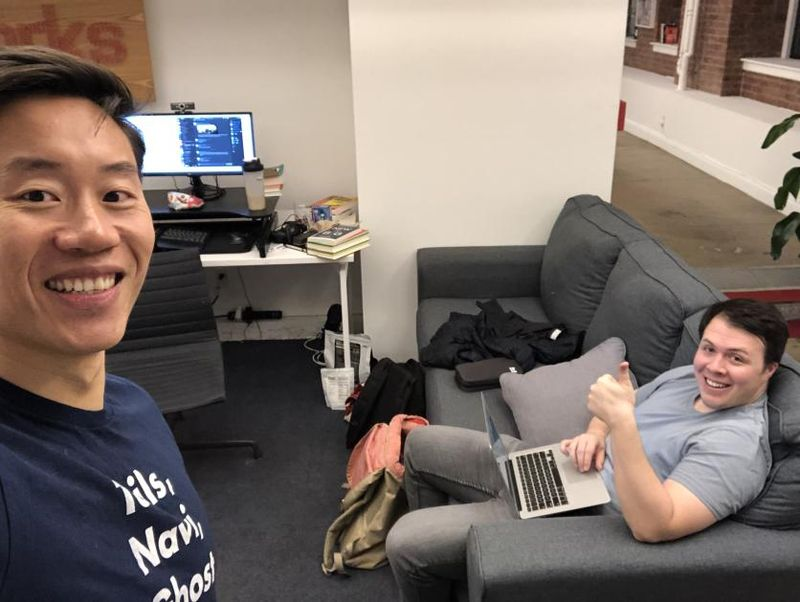

at 5: building with legos, at 33: with cofounder Wayne on startup #3, at 39: with Ashton and Amanda
The short version:
national champion gymnast, three-time founder, coach.
- Junior national team member → recruited scholarship athlete at Stanford. Blew out my knee junior year, took 12 months to return to competition, elected team captain the year we took back the NCAA title.
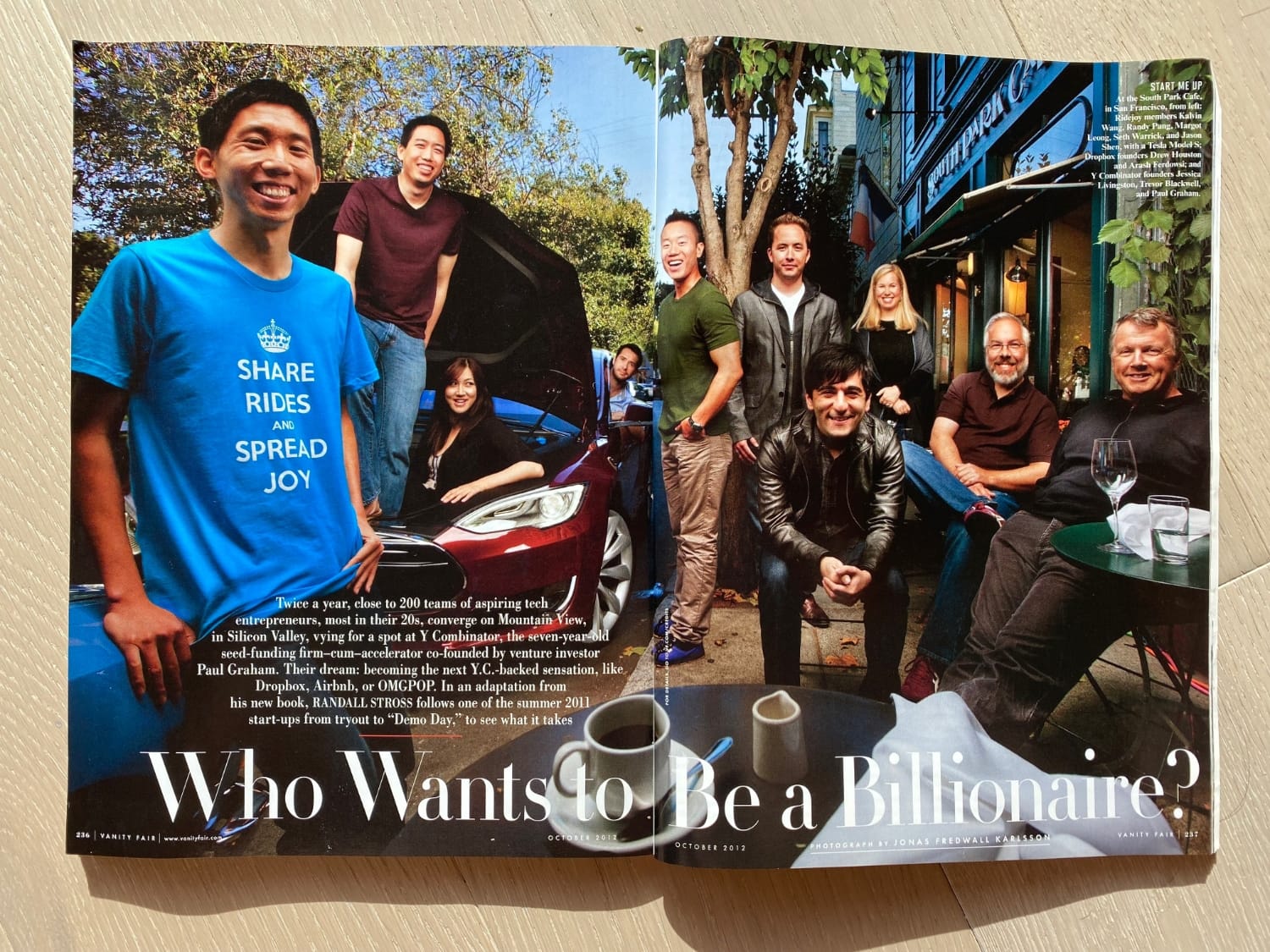
- Founded three venture-backed startups: Ridejoy (Y Combinator S11), Headlight (acquired by Woven), and Midgame (acquired by Facebook). Product roles at Etsy and Meta.
- Trained in the Gottman Method, the most heavily researched framework in the world for high-stakes partnerships. I apply it to the relationships that make or break companies, starting with cofounders.
The longer version: I'm a first-generation immigrant from China who watched my parents grind so their kids could have a shot. I have ADHD, and I've spent my adult life figuring out how to direct that creative impulsivity and novelty-seeking somewhere useful. I'm married to an internationally recognized contemporary artist (@alonglastname), and our partnership and our daughter Ashton keeps me honest about what a life is actually for.
I'm still pushing myself physically, whether it's in weighted Murphs in Crossfit or setting two Guinness World Records for most number of Aztec Pushups because apparently I wasn't done competing.
I've been the founder lying awake doing runway math. I also lost a company in part to cofounder conflict, which is why a dedicated part of my practice now exists to prevent exactly that.
You can do this on your own. It will probably take longer and suck more.
You're a self-starter, smarter and more resourceful than most people you meet. Of course you can figure it out solo. A few reasons founders work with me anyway:
- It's lonely. Your cofounders, investors, and team are the wrong audience for half of what's in your head. I'm the right audience for it.
- Most people don't get it. The majority of coaches and therapists have never taken the kind of risks you've taken. And most of your founder friends are putting on a brave face, which makes it hard to get real.
- You can't see your own blind spots. Over time I learn your values and your patterns, and I'll put them in front of you before you make the call, instead of after.
Ready to Talk?
Book a 55-minute discovery call. Bring a real problem and we'll work on it live. You'll leave with something useful whether or not we end up working together.
In conflict with your cofounder? This page describes my 1:1 practice. The cofounder relationship is a different engagement entirely: The Repair is my 13-week program for cofounder pairs, built on Gottman-method principles and priced for what's at stake. If your Slack threads have gone passive-aggressive or you're both rehearsing arguments in the shower, start there. (And grab Say It Straight, my free scripts for hard cofounder conversations.)