How I'm Making Non-Slop Videos with AI

Everyone I know is trying to explore and exploit the power of AI to improve their lives and be more productive. But rarely do we get into the nuts and bolts of what we're using and what we're really getting out of it.
So this post is my contribution to the Real Wins with AI canon.
- Context: why is video important and why is it hard?
- Impact: what AI is enabling for me
- Use case: what I am doing with video
- Workflow: my process for making video
- Full stack: all the tools I'm using in this process
- What's next: future goals and reflections
Context
Given how easy it is to create text with LLMs (not always good content, but content nonetheless), video is the next place of "higher ground" where you can still stand out if you have an important message you want to reach people with.
This is why The Yap Challenge has grossed millions of dollars and you see more and more people creating videos to promote themselves and their business interests in YouTube, LinkedIn, IG, Tiktok etc. You're more likely to watch a video of someone promoting something, than read a post about it.
Video has greater production requirements: camera, lighting, microphone, delivery, editing and visuals. It requires more to get right.
So in January of this year I started a brand new YouTube channel called @cofoundercoach meant to grow the cofounder repair offering in my coaching practice.
 Jason Shen
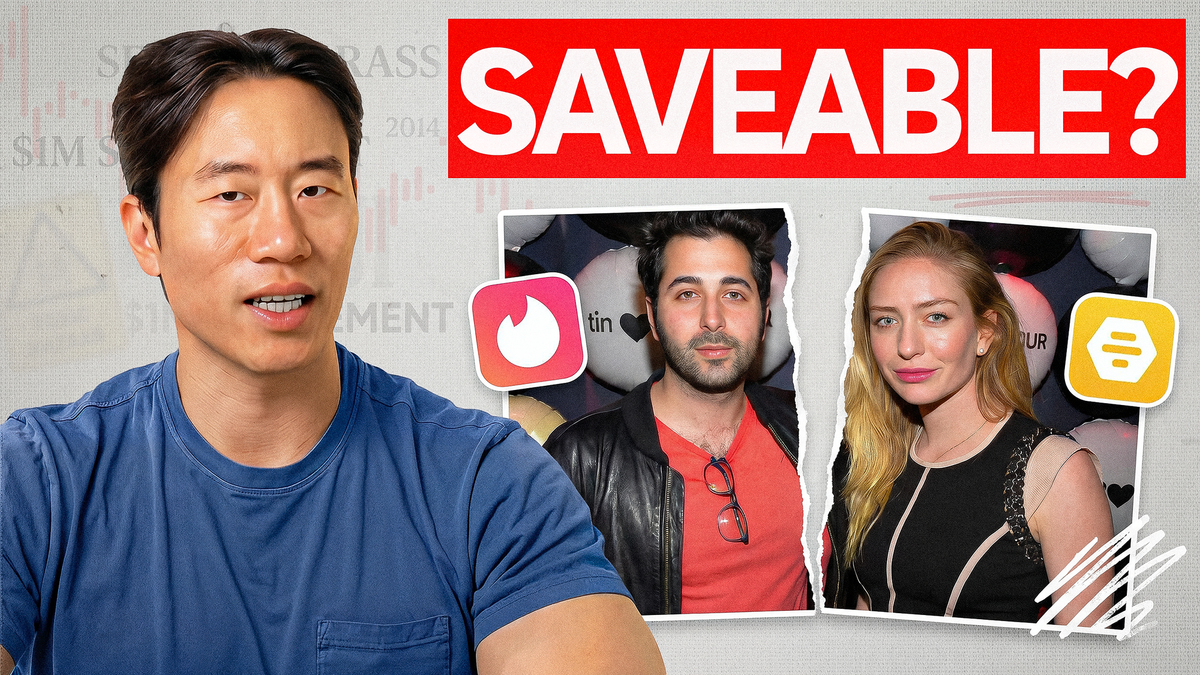
To produce these videos, I hired an agency that charged $300 a month to edit up to four videos (already a basement bargain price). The process was clunky, with several rounds of review and feedback. Despite giving them a decent amount of edit instruction and guidelines, I would often find myself making the same corrections over and over again and it was to demotivating to think about making more videos.
Impact
When Claude Opus 5.5 was released on September 22, 2026, people immediately started sharing how they were using it to create and edit high-quality videos. It made me wonder: could AI actually replace my clunky agency workflow?
The short answer is: yes, it absolutely can.
To be clear, I’m not talking about image or video diffusion models like Higgsfield, Seedance, or OpenAI's short-lived Sora. Those tools have advanced too, mostly by flooding the internet with fake videos—what a lot of people call "AI slop," stuck in that uncanny valley where footage tries to pass as real without ever quite getting there.
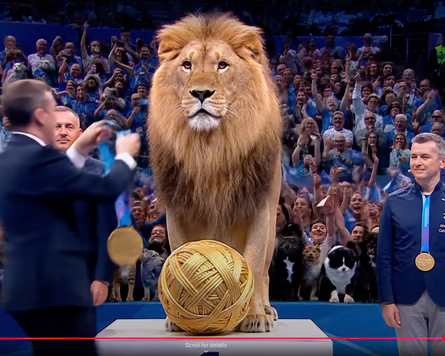
Instead, I’m talking about AI writing code that transcribes audio, cuts silences and filler, adds jump cuts and transitions, generates illustrations, animates text and UI, and manipulates images. With this latest model, you can finally pull off that entire workflow for long-form (10+ minute) videos using a single prompt.
Fast forward to now: I've published 6 of 17 in the last month alone, because AI has helped me both edit recorded footage and augment it with visually engaging B-roll, and taken audio-only content and built an entire visual track to accompany it.
Have the videos taken off?
No. I can tell they still need work on packaging, hooks, etc.
But do I have a lot more motivation to make more videos, and do I believe my work will ultimately pay off?
Hell yes.
What I'm Making
I want to get to the good stuff so let me keep this part short: I'm making three kinds of videos right now:
1. Longform Landscape
12-25 mins videos for founders who are searching for founder help or randomly browsing into my content on Youtube.
Here's a video I edited about the conflict and repair strategies for a particular combination of CEO and CTO/COO.
2. Midform Landscape
5-9 mins videos that I'm using in my coaching work to explain a concept or idea to ground an upcoming coaching session.
Below is a video about how and why we have to go back to past events to remove emotional baggage.
3. Shortform Portrait
1-3 mins vertical videos to share on LinkedIn, Instagram, Youtube, Threads, and X to be top of mind for people already in my networks and as a discovery path into me
This is one I quickly shot after a coaching call that talked about accountability and what it really means (not the same as being a bad cop or micromanager).
Workflow
Here's how I'm working now:
Figure out the message - sometimes it's just me coming off of a call with an immediate thought. Sometimes it's an idea that's been cooking for a while and I use a voice memo to brain dump and organize my thoughts.
Record footage - this might be using my webcam, or my phone, or my Osmo Pocket 3, or for fancy stuff, going to Kit Studios in the city. I may riff or write a script and read from a teleprompter. I also have done audio only footage pulling excerpts from my real coaching calls on Fireflies.
Clean the footage - depending on how raw it is, the first step is removing retakes, dead spaces, filler words, and rambling sections.
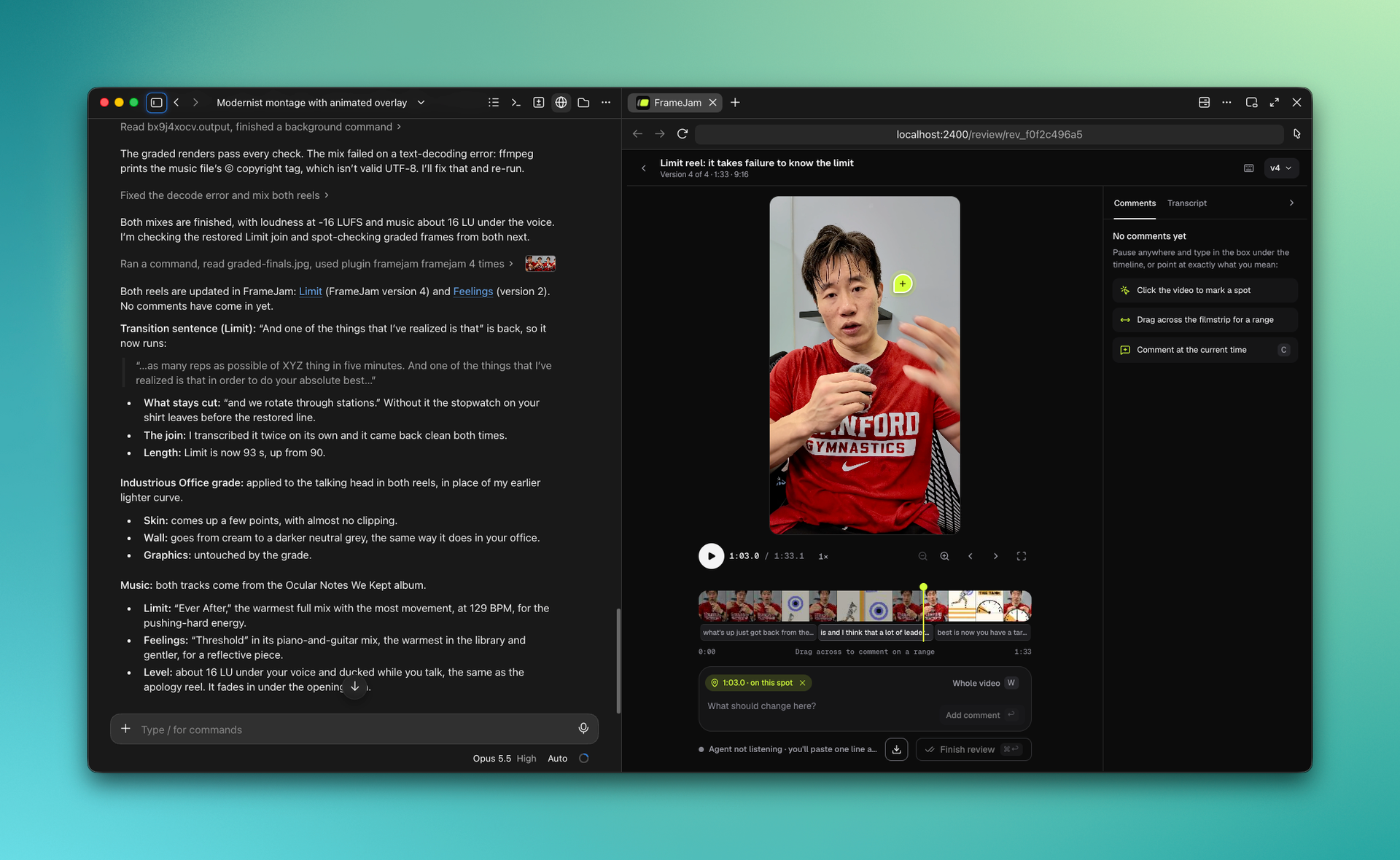
Generate B-roll - this is the fun and creative part of the experience. I've developed a couple different styles, including "Kinetic Type", "Modernist Montage", "Night Collage", and "Line Drawing". Claude can also watch other videos you've downloaded to build a style around that. My goal has been less realistic or 3D cartoon-y, but more of a humanistic feel.
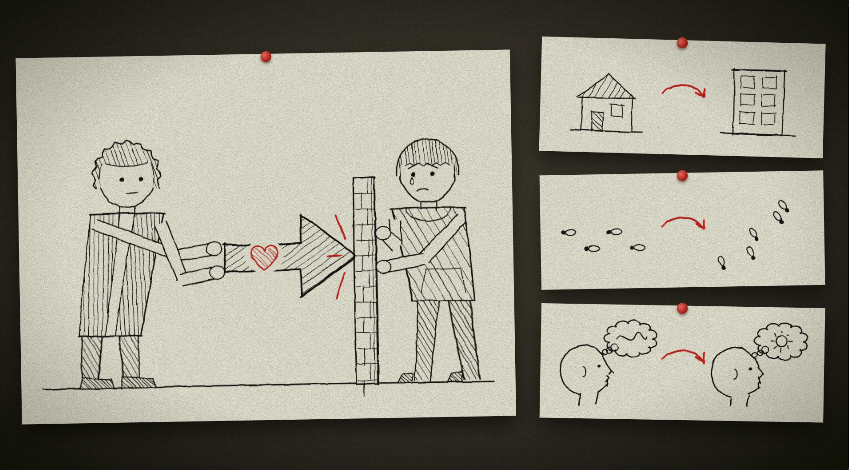
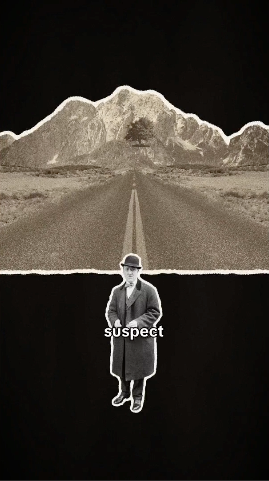
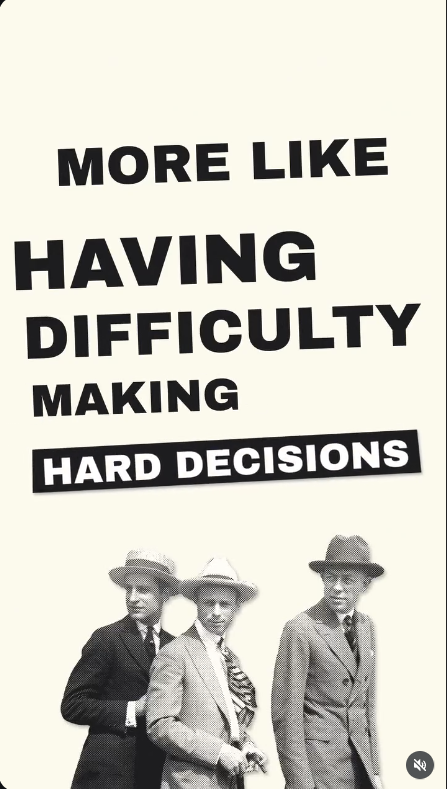
Audio, music and sound effects - I've purchased several music libraries for background tracks and the subtle foley that adds that extra oomph to videos (e.g. pops, whooshes, dings). I've also developed some equalizer tweaks to make my boomy Zoom call recordings sound more warm.
Review footage - I can now leave comments on the footage Claude gives me on the exact timestamp and location onscreen that I want fixed. Comments like "use a different metaphor here" or "make the hammer fit inside his hand" or "this came in too early and abruptly" are all understood like a human editor would (often better than the team I had working with).
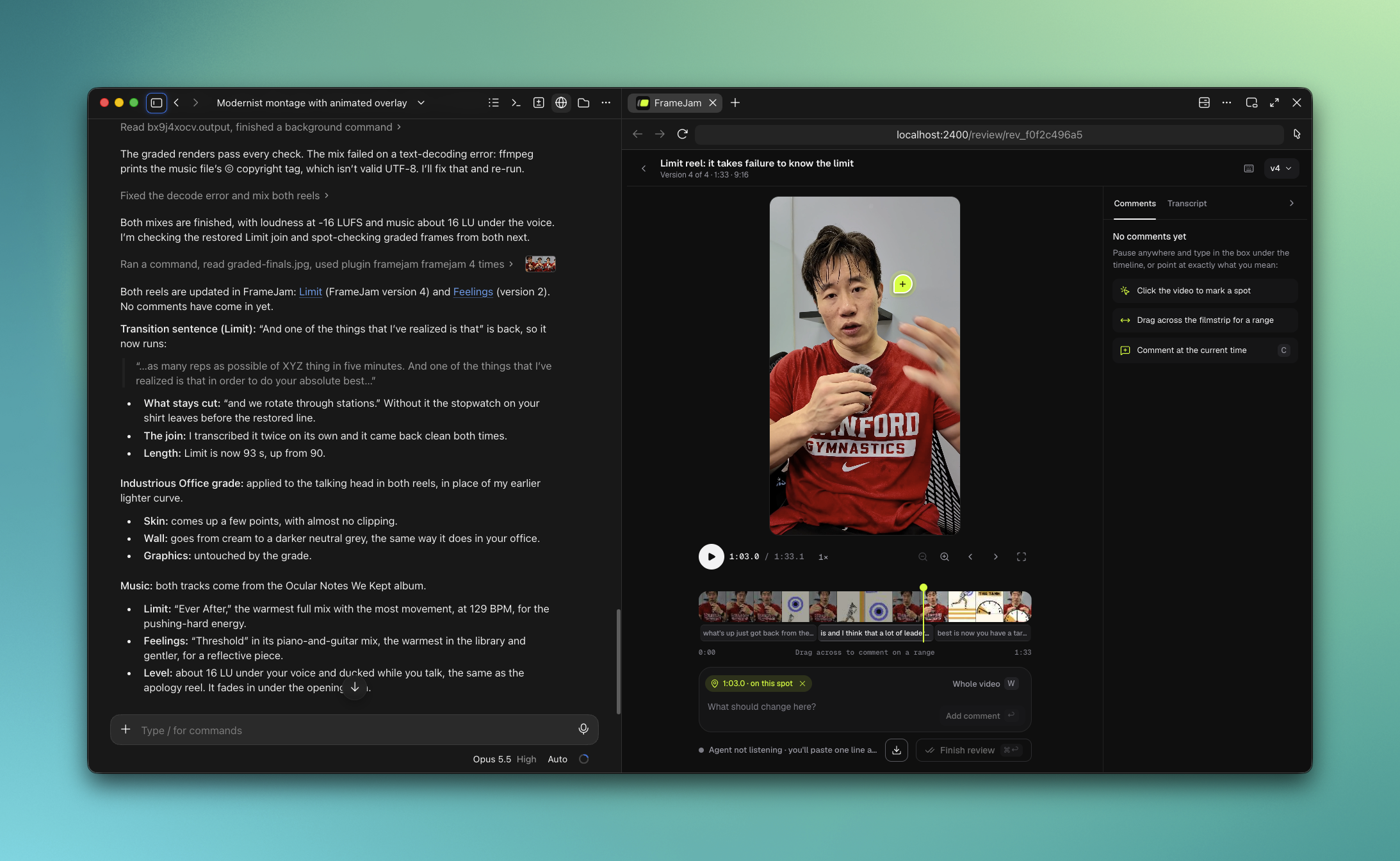
Once I'm happy with the final cut I can then upload it to my platform of choice (I'm teaching Muse how to schedule videos on my behalf which is also amazing)
The best part of all this: the only thing I'm paying for is Claude Code Ultra ($200 / mo) which does many things for me and is less than the $300 I was paying to edit up to four videos (assuming you were able to generate that many each month).
The Full Stack
I asked Claude to list out all the tools / libraries we are using and this is what it gave me. If you want to steal this setup, just drop this page into Claude Code and tell it to build a system like it.
| Layer | Tool | What it adds |
|---|---|---|
| Brain and hands | Claude Code (desktop app) | Plans the edit, writes and runs every script, checks its own output, keeps notes between sessions |
| House rules | CLAUDE.md, playbooks, memory | My taste and past lessons, written down so they apply to every project without me repeating them |
| Packaged workflows | Skills (/locked-cut, video-use, HyperFrames skills, /watch) |
Repeatable recipes: one command runs a whole pipeline the same way every time |
| Picture | ffmpeg | Cuts, zooms, concatenation, speed, compositing, LUTs. Fast and exact |
| Graphics | HyperFrames (HTML + GSAP rendered to video) | Motion graphics written as web pages, rendered alone as transparent overlays |
| Words and timing | whisper.cpp (large-v3-turbo) + WhisperX alignment | Local transcript with word boundaries to ~20 ms, about 2 min for 23 min of audio |
| Stumbles and fillers | ElevenLabs Scribe | Catches the "um"s and tiny repeats Whisper hides |
| Where the sound is | Python + numpy energy envelope (10 ms) | The real source of truth for cut points: the transcript says what, the waveform says where |
| Captions | PIL | Captions drawn as their own layer in the brand fonts |
| Voice | pedalboard (Spotify) + ClearVoice super-resolution | Makes 16 kHz call audio sound close to a studio mic |
| Colour | G'MIC (1,189 looks), OpenColorIO, a small grade.py |
Look sheets to compare grades side by side, then a LUT for ffmpeg |
| Pictures | Collage Kit (3,550 cut-outs, tagged catalog) + Wikimedia Commons public-domain harvest | Searchable raw material: Claude picks cut-outs by tag instead of opening 6,000 px PNGs |
| Sound effects | Pure-Python synth | Every whoosh, stamp and pen scratch generated from code. I preferred it to sound libraries |
| Music | Film Crux OCTIVE, Ocular Sounds | Warm, melodic beds, mixed about 24 dB under speech |
| Source audio | Fireflies connector | Pulls call recordings straight into a project |
| Review | FrameJam | I watch the render and leave timestamped comments; Claude reads them and makes the next version |
What's Next
I'm working with some tools that can sharpen the footage off the webcam so it looks slightly better (will never beat a phone, DSLR, or dedicated video recorder, but passable more often).
I'm also working on an eye contact adjustment tool so I can straight read off my screen while still connecting directly with the viewer. Though this may be a crutch that I need to not lean on and focus on just delivering better to camera.
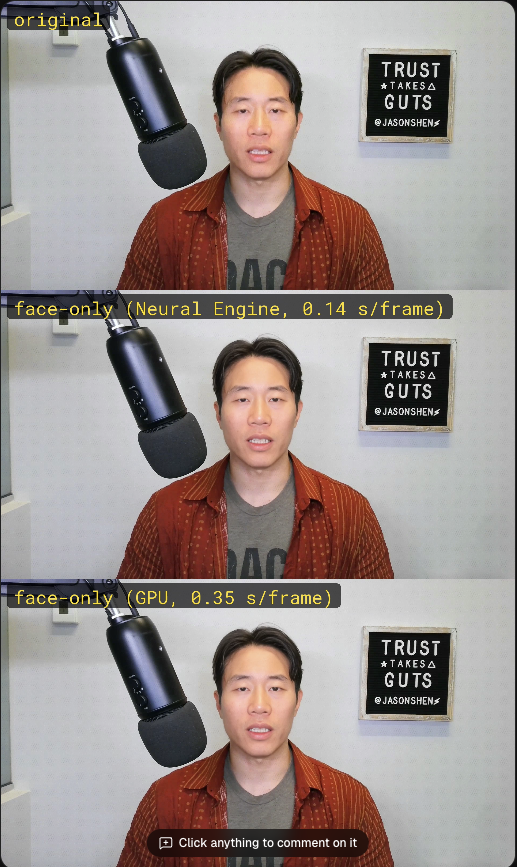
Finally I’m working to teach AI how to study successful YouTube thumbnails to help me generate good ideas and visual concepts for my videos.
How do I feel about this, ethically?
Well, at least on the copyright / IP front, pretty good. This form of AI video generation was not trained on other people's videos in the sense that it watched millions of hours of footage. It's taking still images, understanding what's happening between them, generating rules of movement and color and technique, and writing brand new code that renders out to what you see.
I paid for the background music and old-timey images you see in the videos. No one owns the idea for drawing content by hand.
Meanwhile I believe that talented video editors will only be able to make even more impressive visual experiences using these tools to expand their capabilities. And millions of people will make videos that delight them that previously could not have imagined doing so.
As human beings, it's been both our ability to create cultural identity and invent powerful tools that have allowed us to become the dominant species on the planet.
AI is that next step, technology wise, and ultimately I believe we all have to learn how to live with its presence as there is no longer any putting the genie back in the bottle.
Weekly breakthroughs from my coaching practice — for founders building companies they're proud of.
Member discussion